





- - Seondo Electric receives "NeuroPanel" technology transfer from KIER
- - Analyzes power use circuit by circuit without extra meters, and finds where energy is wasted
- - Works with meters already installed in existing buildings; product development now under way
Seondo Electric Co., Ltd. (CEO Hyuk Kwon), a Korean manufacturer of power distribution equipment, announced that it has received a technology transfer of "NeuroPanel," an AI-based smart distribution panel technology, from the Korea Institute of Energy Research (KIER). The technology was developed by a research team led by Dr. Jong-hoon Kim, Principal Researcher at KIER's Energy ICT Research Department and Professor at UST. Seondo Electric has begun joint product development with the team.
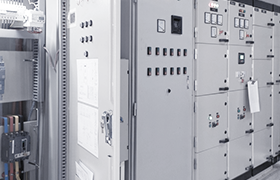
A distribution panel takes the electricity that enters a building and sends it to separate circuits for lighting, heating and cooling, outlets and other uses. If these circuits are measured, a building manager can see exactly where power is used and how much.
Until now, however, building energy management has usually measured only the whole building or the main breaker. Installing a meter on each of the dozens of circuits inside a panel is expensive, and identifying what each circuit is used for depends largely on the manager's experience. As a result, it has been difficult to find the kind of waste that is easy to miss — lights left on after working hours, or heating and cooling running in empty rooms.
NeuroPanel was developed to solve this problem. It is a small AI device installed inside the distribution panel. Without additional meters, it can show how much power each circuit uses and predict how each circuit will be used, which makes energy management more efficient.
Its main function is load separation. Much like picking out the sound of each instrument in an ensemble, NeuroPanel uses only the power data from the main breaker to separate and read the usage of each circuit below it. Because meters are not needed on every circuit, the cost of adoption drops significantly. The device also recognizes automatically what each circuit is used for, predicts future usage patterns, judges which circuits are less critical, and tells the manager where power can be turned off.
For its calculations, NeuroPanel uses a spiking neural network (SNN), which performs computation only at the points where a spike occurs. Compared with a general neural network, this reduces the power used for inference by about 54 percent, making it well suited to running AI on a small device inside a panel. NeuroPanel is also designed to work with electricity meters that are already installed, so it can be applied to existing buildings without replacing equipment on a large scale.
The research team evaluated the technology using one year of operating data from two buildings at KIER's main campus. The analysis confirmed energy savings of about 15 percent compared with existing equipment.
Seondo Electric will take on the work of turning the prototype into a product, drawing on its long experience in manufacturing switchgear, distribution panels and switches. Together with the research team, the company plans to work step by step on integrating the device into panel structures, meeting domestic electrical standards and certification requirements, and ensuring stable operation in real building environments. Seondo Electric is also reviewing how to add energy management functions to its existing distribution product line. Detailed specifications and a release date will be decided as the joint development progresses.
"Demand for building energy management is growing, but installing a meter on every circuit costs too much for many sites to choose it," said Hyuk Kwon, CEO of Seondo Electric. "Through this cooperation, we want to work with the research team to find a form that can be applied without greatly changing the distribution panels already in place."
Related coverage